
What is the Essence of Adolescence? Navigating the Teen Years.
Adolescence marks the shift between childhood and adulthood, roughly between the ages of 11 and 24, and is the second significant period of brain growth after infancy. The adolescent years are a fascinating, often bewildering, time of transformation. Adolescents experience a remodeling of the brain where, instead of continuing to soak in information like a sponge as in early childhood, the brain goes through a process of rapid reorganization and then pruning, turning adolescents from generalists into specialists.
For parents, educators, and other supportive adults, understanding the adolescent shift is essential for guiding teens through one of the most critical developmental periods of their lives. It's a time when direct authority gives way to guiding autonomy. Conflicts can escalate easily, and emotional landscapes shift dramatically.
What is the ES-SE-N-CE of Adolescence
In this blog we will briefly touch on four features of this massive change - that are important for setting the stage to becoming an adult. How we support adolescents as they navigate these years has a direct impact on how they will live the rest of their lives, because these features are a vital step in the process of individuals becoming independent adults.
💥 Emotional Spark (ES): The Core of Adolescent Emotion
The first key feature of adolescence starts with Emotional Spark (ES), or passion. This is rooted in significant updates to the limbic system, which heighten the brain's emotional reactivity.
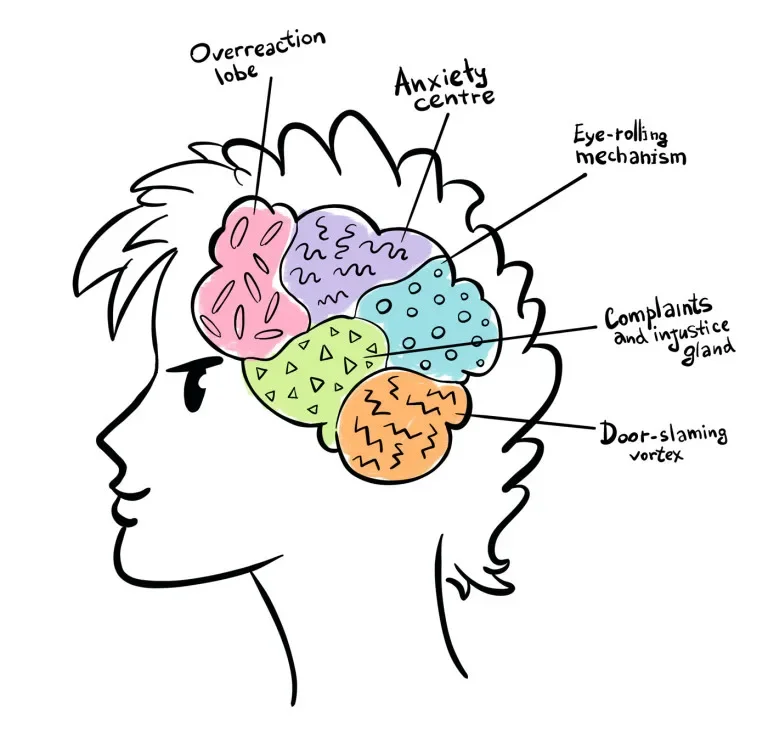
Rough sketch of teenage limbic system
Why Emotions are Intensified
Heightened Sensitivity: The feeling centers located beneath the cortex are more sensitive in adolescents than they are in either children or adults.
The "Gong" Effect: Emotional input that might register as mild or manageable for an adult (ringing like a chime) rings like a gong for a teenager, leading to more intense internal reaction. This means that, yes, what adolescents are broadcasting reflects what they are experiencing..
Unfiltered Response: Teens often have a more immediate and emotional response that is less likely to be filtered or moderated by the still-developing cortical reasoning areas of the brain - this can lead to misinterpretation. For teenagers, even neutral responses from a parent can be misinterpreted as hostile or threatening. This disconnect often leaves parents bewildered when a simple morning greeting, like "Hello," is met with an immediate, defensive query such as, "What? What do you want?"”
The Positive Purpose of Passion
A helpful reminder is that emotions evoke motion. Your teen needs this elevated sense of passion (or Emotional Spark) to feel engaged in their lives and inspired to take on new challenges, which is crucial for growth and development.
🫂 Social Engagement (SE): The Drive for Connection
The second key feature of adolescence is the strong drive for Social Engagement (SE), or connection. This period marks a natural shift in the focus of attachment:
Changing Bonds: The nature of the emotional bond teens have with their parents or primary caregivers evolves as they begin the process of separating.
Peer Importance: There is an increased drive toward peer connectedness, meaning friends become far more important as teens actively work to "find their tribe."
Survival Instinct: Gaining a sense of belonging feels critically important—it can even feel like a matter of survival to the adolescent brain.
This push for peer connection is essential as teens are neurologically preparing for independence. They need to build a supportive network of peers as they begin to imagine and prepare for gaining distance from the family.
✨ Novelty (N): The Courage to Do New Things
The next feature is Novelty (N), the drive to seek new and stimulating experiences.
Dopamine Shift: Teens experience a lower baseline level of dopamine but a higher release level in response to novel experiences. This biological shift explains why they may frequently report feeling "bored" unless they are engaged in highly stimulating and new activities.
Hyper-Rational Thinking: this kind of desire to over-emphasize potential benefits of an action is linked to the increased drive for reward. Teens tend to put more emphasis on the calculated benefits of a new action than they do on the potential risks, encouraging them to take chances and explore.
Seeking out novel experiences often involves trying new sports, hobbies, or academic subjects. This allows teens to identify their talents, passions, and interests, which are crucial for forming a sense of competence and self-concept.
🧠 Creative Exploration (CE): Imagining the Future
The final feature is Creative Exploration (CE), which involves the powerful drive to imagine and create a future self and world.
Challenging the Status Quo: This drive compels teens to push against existing norms and conventional thinking.
New Perspectives: They begin to see the world through a new, critical lens, questioning established rules and ideas.
Future Vision: Creative exploration is essential because it allows teens to vividly imagine the life they want to build and live in as they approach adulthood.
Understanding the Big Picture
Focusing on the essential and positive nature of these four key adolescent features (ES, SE, N, CE = ESSENCE of ADOLESCENCE) does not mean we ignore the very real challenges and downsides they present. Instead, this understanding helps parents, educators, and other supportive adults be more adaptable and resilient as they guide teens through this critical developmental phase.
🛠️ Tools for Navigation: Guiding, Not Controlling
How do we best support teens through these turbulent and exciting years? Our roles as parents,caregivers, and teachers and professionals must evolve from a manager to a consultant, focusing on guiding autonomy rather than direct control.
1. Foster Open Communication (and Really Listen) 👂
Create a safe space where teens can share without immediate judgment. This means prioritizing listening over lecturing or problem solving. Ask open-ended questions, validate their feelings ("That sounds really frustrating"), and share appropriate personal experiences to build connection.
2. Set Clear Boundaries, Offer Choices ⚖️
Teens still require boundaries, but the enforcement method must change. Instead of imposing rules, involve them in setting expectations and consequences where possible to grant them a sense of control (e.g., "Homework needs to be done tonight - but if you want to get it done now or after dinner is up to you”). This shifts the dynamic from a power struggle to collaborative problem-solving.
3. Encourage Healthy Risk-Taking 🌱
Adolescence naturally involves boundary-pushing. Guide this drive toward healthy risks like trying out for a sport, or taking on a new skill or an academic project they would otherwise shy away from. These experiences positively fulfill their need for Novelty (N) by building confidence, resilience, and a sense of accomplishment.
4. Validate Emotions, Teach Regulation 🧘
Avoid dismissing their intense feelings ("It's not a big deal!"). Instead, validate them ("I can see you're really upset"). Then, help them develop coping mechanisms and distress tolerance skills (like distraction, self-soothing, or exercise) to manage overwhelming emotions.
Crucially, adults need to model healthy emotional expression as well!.
5. Prioritize Connection Over Perfection ❤️
The teen years are messy; mistakes and arguments are inevitable. During these times, make maintaining your relationship the priority. Let them know your love is unconditional, even when you disagree with their choices. A strong connection acts as their most vital safety net.
6. Empower Autonomy (and Let Them Fail Safely) 🗺️
As they seek independence, step back and allow them to make more decisions. Natural consequences, when kept within safe limits, are the most powerful teachers. Resist the urge to constantly "fix" things. Your role is evolving from manager to consultant.
Navigating the teen years is a challenge, but it is also a profound opportunity for growth—for both teens and the adults supporting them. By understanding their developing brains and adapting our guidance, we help them journey toward becoming confident, capable adults.
Are you a parent looking for support for your teen or yourself? Book a consultation call with our intake coordinator today.
If you are interested in programs and workshops for children, tweens or teens at your school, schedule a discovery call with our Director of School-Based Services today.
Visit our website to learn more about Practice San Francisco’s dynamic, multidisciplinary team of licensed psychologists and therapists.
More Resources to help with navigating the teen years can be found on our Resources page!
